Arthamimansa – Research Journal
Welcome to Arthamimansa Research Journal

Research Journal of Vidarbha Arthashastra Parishad

Included in earlier published UGC CARE Journals (Group-1) List

Research Articles
Browse peer-reviewed research publications
Article Thumbnail
Research Article Beyond the Gross Domestic Product: Integration of Unpaid Work of Women into National Accounts
Preview Abstract

This research paper explores how and why unpaid work is excluded from national income metrics. Unpaid work, which involves domestic and care work, remains excluded from the System of National Accounts' (SNA) Production Boundary; this leads to incomplete economic indicators. This study critically examines the SNA framework, highlighting its limitations in capturing non-market activities and their economic value. Through a socio-economic approach, the paper deeply studies methodologies such as the opportunity cost method, replacement cost method, and time-use surveys to measure and value unpaid work. To avoid underestimation or overestimation of these services, we reviewed extensive literature on various theories and case studies trying to include unpaid work in national accounts. The findings of the paper highlight the importance of unpaid work and its contribution to societal welfare and male-female equality. The paper proposes expanding the SNA production boundary to include unpaid work in the GDP.

Keywords: System of National Accounts, Production Boundary, Unpaid Work, Gross Domestic Product

Article Thumbnail
Research Article Analysis of Women Participation in Life Insurance sector in India
Preview Abstract

This study focuses on the changing role of women in life insurance sector in India in terms of their role as the policy-holders as well as agents. Historically, women have demonstrated a conservative outlook to financial investments with some of the reasons being traditional gender roles, lack of financial literacy, and economic constraints. Despite all of these challenges, recent data sees a positive trend of the female engagement in the life insurance market. To further highlight, by analysing secondary data of various states of India by financial year 2022-23, the ratio of women's insurances is higher than the all-India Average (34.20%) in 15 states/UTs which reveals that women are having a significant presence in the sector. The ongoing barriers such as discriminatory regulations, lack of financial resource access and societal biases continue to exist to restrict full participation of women in the sector. To improve women's participation in the sector, a multifaceted approach is recommended which involves enhancing financial literacy and developing products that suit their needs. By overcoming barriers and leveraging strategic initiatives, the contribution of women in India's insurance segment can support financial empowerment and innovation on a macro level.

Keywords: Women insurers, Women insurance agents, Public and Private Insurers

Article Thumbnail
Research Article Economic Impact of Artificial Intelligence on Unorganized sector in India
Preview Abstract

This paper examines the economic impact of Artificial Intelligence (AI) on the unorganized (informal) sector in India, with a specific focus on road transportation, construction, and agriculture—three sectors that together contribute significantly to employment and GDP. Drawing on secondary data, policy documents, and comparative case studies from 2018-2025, the study analyses how AI-driven technologies such as autonomous vehicles, AI-enabled logistics platforms, 3D printing in construction, and smart agricultural machinery are transforming production processes and labour demand. While AI adoption improves efficiency, productivity, safety, and income prospects for capital owners and technologically equipped firms, it simultaneously threatens large-scale displacement of unskilled and semi-skilled workers who constitute the backbone of India's unorganized workforce. The paper highlights the uneven distribution of gains from AI, growing risks of unemployment, income inequality, and increased dependence on government welfare schemes, particularly among drivers, construction labourers, and landless agricultural workers. It concludes that without adequate skill upgradation, social security mechanisms, and inclusive policy interventions, rapid AI penetration may destabilize employment structures and exacerbate socio-economic vulnerabilities in both rural and urban India.

Keywords: Artificial Intelligence, Unorganized Sector, Informal Employment, Road Transport, Construction Industry, Agriculture, Technological Unemployment, India, Economic Impact, Labour Displacement

Article Thumbnail
Research Article The Impact of Artificial Intelligence on the Business Litigation Landscape
Preview Abstract

Artificial intelligence (AI) is transforming business litigation by hastening the process of reviewing evidence, enhancing research in the field of law, and altering dispute-solving processes. The paper focuses on the practical applications of AI in an inheritance case, a bank litigation case, property litigation, and tax litigation cases. The study assesses efficiency gains, evidencing risks, and governing requirements through mixed methods whereby literature synthesis, case-law review, surveys of practising litigators and specific interviews are used. Results indicate technology-assisted review will generate measurable time savings but present danger with unverified generative outputs. The recommendations given on the policy include transparency, human reconstruction and equalizing validation criterion to maintain procedural fairness and judicial integrity.

Keywords: Artificial Intelligence, Inheritance matters, Taxation Law, Banking Disputes, Blockchain

Article Thumbnail
Research Article Effective Water Resource Management and Sustainable Agricultural Productivity in Wardha Dist
Preview Abstract

The objective of the present study is to review the healthcare expenditure in Maharashtra over the past decade and examine its economic impact. Healthcare is an important sector that influences both the well-being of the population and the economic stability of the region. Understanding this significant sector and studying its economic implications is therefore of paramount importance. As India continues its journey towards achieving Universal Health Coverage (UHC), this research paper seeks to highlight the government’s commitment to improving healthcare accessibility, reducing financial hardships, and strengthening public health infrastructure. Based on sources such as government reports, healthcare records, and economic surveys, the study evaluates the trends in healthcare expenditure in Maharashtra.

Keywords: Public health service system, Total Health Expenditure (THE), Government Health Expenditure (GHE), Out-of-Pocket Expenditure (OOPE) on health, Gross State Domestic Product (GSDP), social welfare, expenditure trends, General Government Expenditure (GGE)

Article Thumbnail
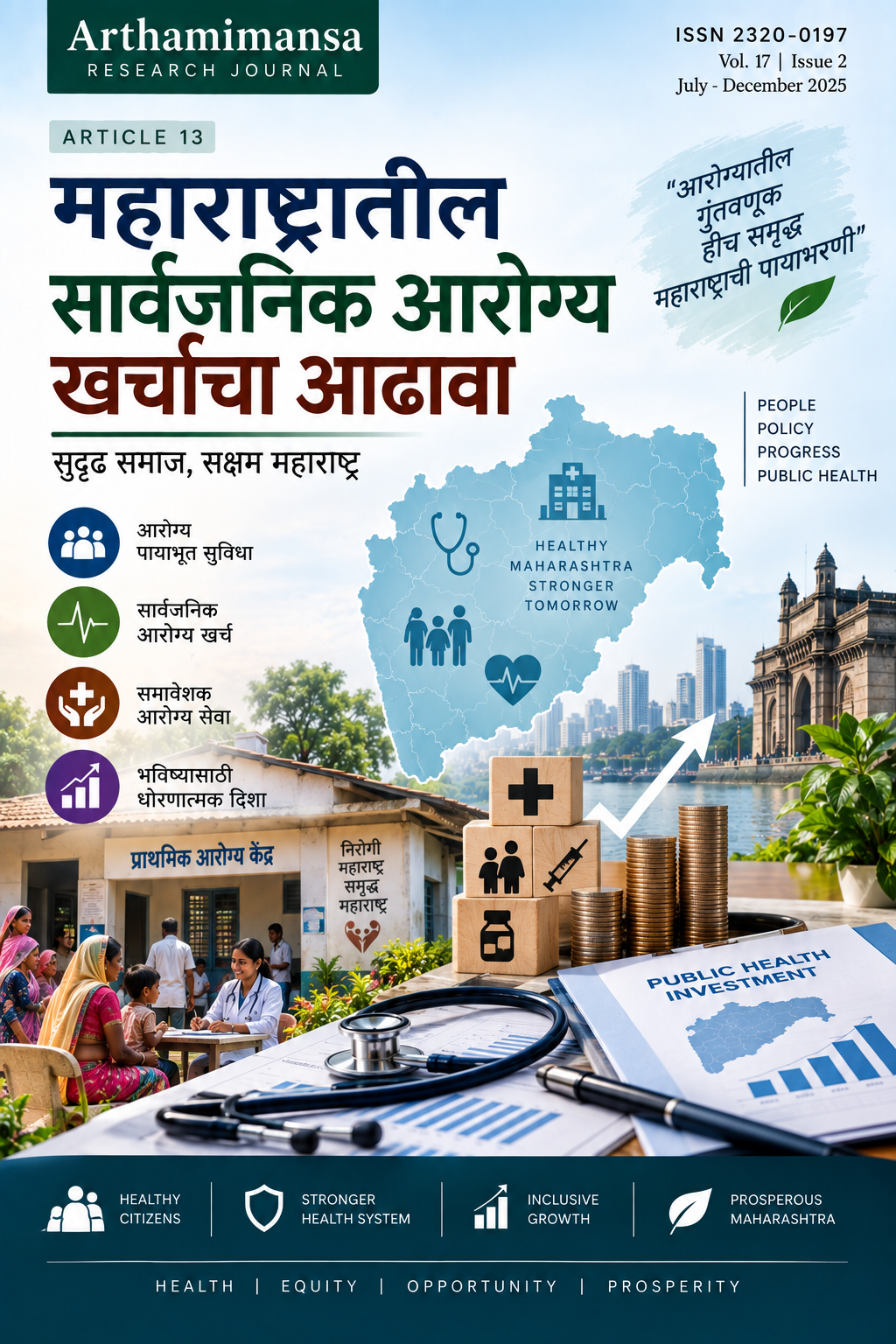
Research Article Review of Public Health Expenditure in Maharashtra
Preview Abstract

'The objective of the present study is to review healthcare expenditure in Maharashtra over the past decade and examine its economic impact. Healthcare is an important sector that influences both the well-being of the population and the economic stability of the region. Understanding this significant sector and studying its economic implications is therefore of paramount importance. As India continues its journey towards achieving Universal Health Coverage (UHC), this research paper seeks to highlight the government''s commitment to improving healthcare accessibility, reducing financial hardships, and strengthening public health infrastructure. Based on sources such as government reports, healthcare records, and economic surveys, the study evaluates the trends in healthcare expenditure in Maharashtra.'

Keywords: 'The objective of the present study is to review healthcare expenditure in Maharashtra over the past decade and examine its economic impact. Healthcare is an important sector that influences both the well-being of the population and the economic stability of the region. Understanding this significant sector and studying its economic implications is therefore of paramount importance. As India continues its journey towards achieving Universal Health Coverage (UHC), this research paper seeks to highlight the government''s commitment to improving healthcare accessibility, reducing financial hardships, and strengthening public health infrastructure. Based on sources such as government reports, healthcare records, and economic surveys, the study evaluates the trends in healthcare expenditure in Maharashtra.'

Article Thumbnail
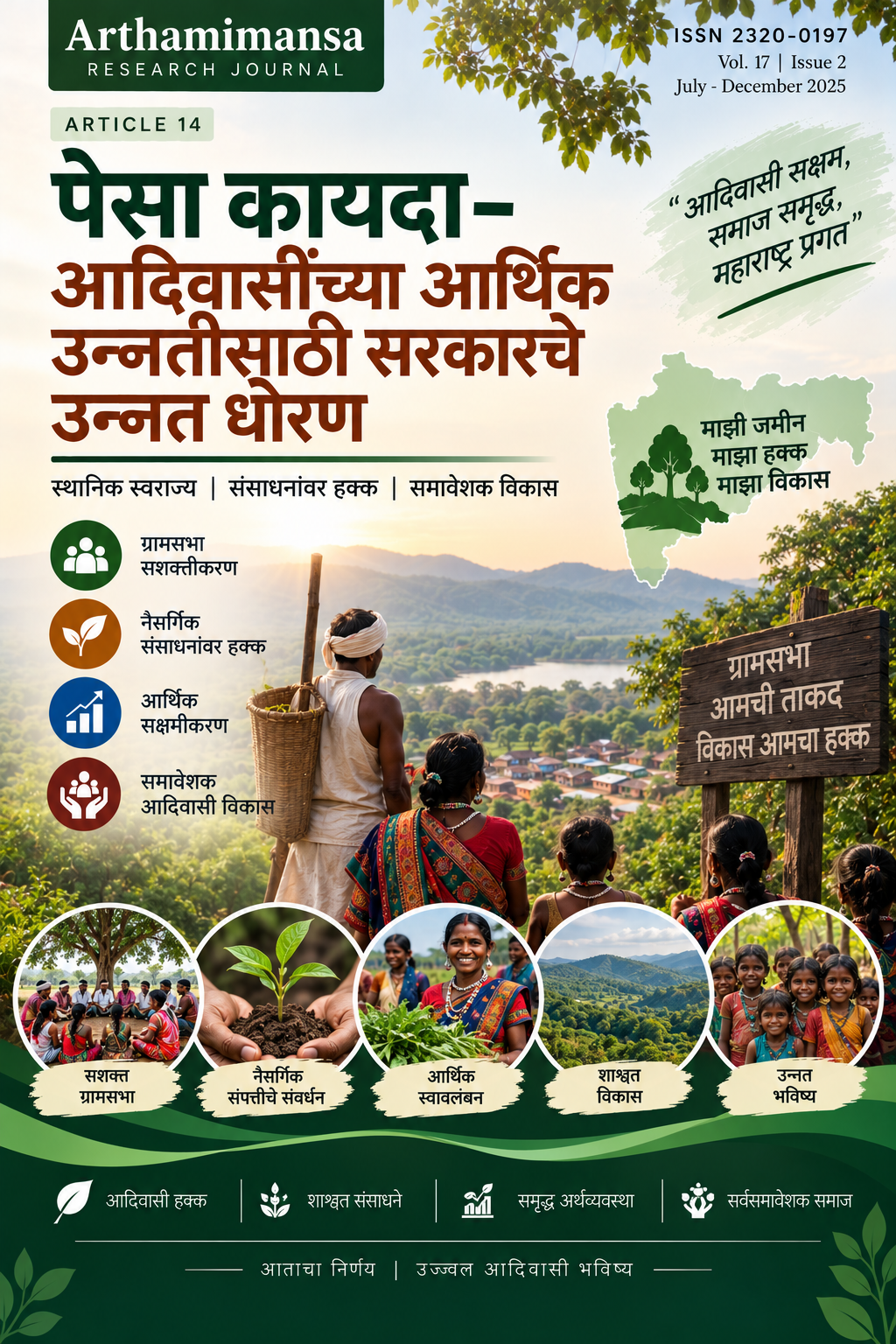
Research Article PESA Act – The government's progressive policy for the economic upliftment of tribals.
Preview Abstract

The Panchayat Extension to Scheduled Areas Act, 1996 (PESA) and the economic development of tribal communities are interdependent and complementary aspects. The PESA Act, 1996, is a highly significant law enacted by the Central Government. It incorporates important constitutional provisions for the development of tribal communities as well as measures required for the effective implementation of the PESA Act. The Act has considerable potential to preserve the self-respect of tribal communities and make them self-reliant and economically independent. Consequently, it is expected to bring about meaningful transformation in the lives of tribal communities. The primary objective of the PESA Act is to protect tribal people residing in villages within Scheduled Areas and provide them with various facilities. This research paper examines the government’s policies for tribal communities in Scheduled Areas, the reasons behind the enactment of the PESA Act, its background, its necessity, the 5% untied fund, and the impact that proper implementation of the PESA Act can have on the economic advancement of tribal communities.

Keywords: PESA, Scheduled Areas, provisions, Panchayat, community

Article Thumbnail
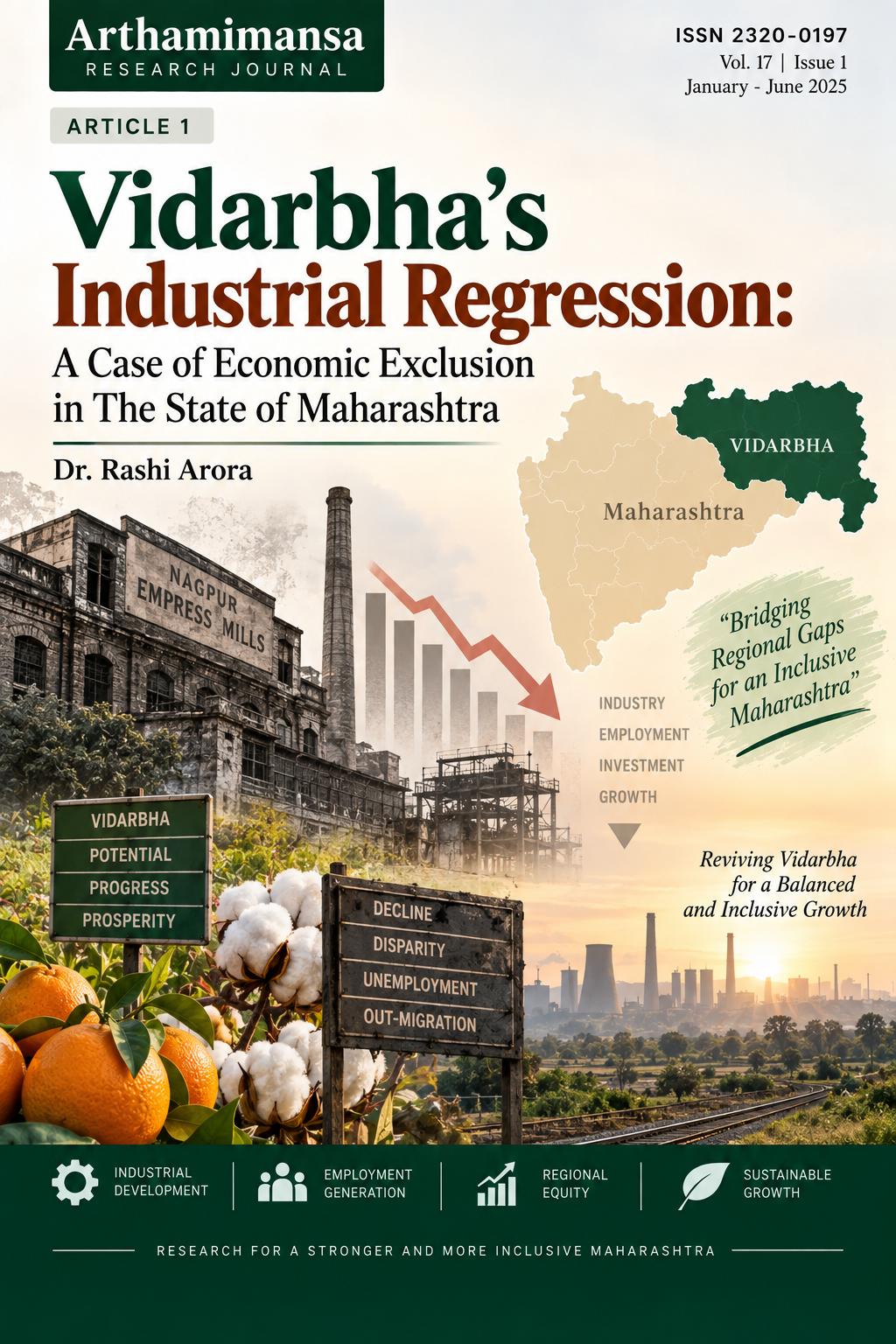
Research Article Vidarbha’s Industrial Regression: A Case of Economic Exclusion in The State of Maharashtra
Preview Abstract

Vidarbha in the past had shown a strong potential for industrial and economic growth. The region was a base for the growth of large-scale textile units like Empress Mills & Model Mills. It was the center for printing presses, including the Government’s Central Press. Due to significant orange production, the cold storage units in Vidarbha gained ground. But today, in contrast to the historical healthy picture, its industry is in distress analogous to its agriculture. This being the case, it is crucial to factually establish that the industry of Vidarbha was a flourishing one along with studying the retrogressive transition of Vidarbha’s industry from a prosperous to a distressed one, with an objective to understand the chief reasons for this transition along with deliberating on the possible solutions to revive its industry and economy.

Keywords: Vidarbha’s Industry, Economic Exclusion, Regional Inequality

Article Thumbnail
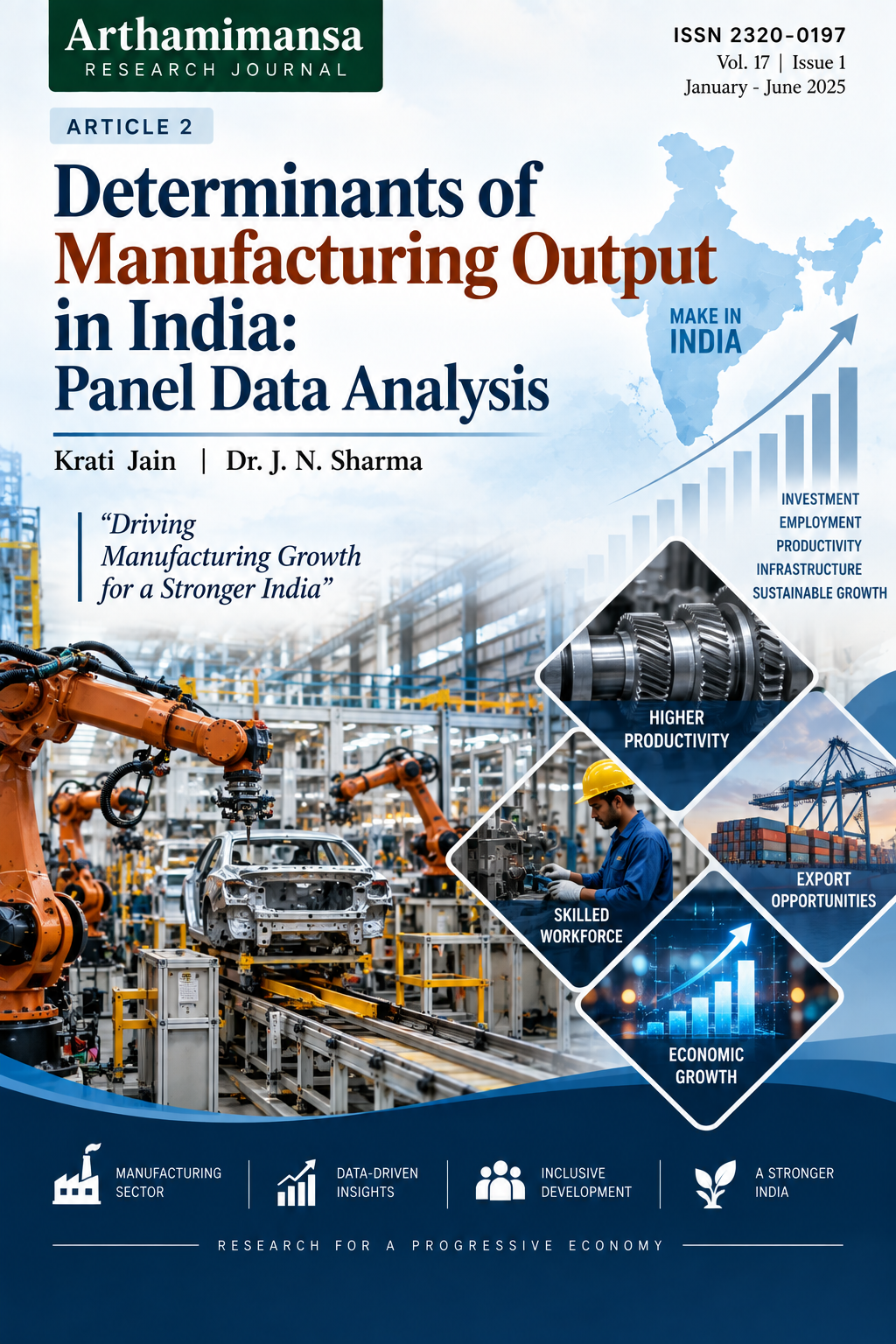
Research Article Determinants of Manufacturing Output in India: Panel Data Analysis
Preview Abstract

This study investigates the determinants of manufacturing output in India for the period 2000 to 2019 considering 25 states of India. The study employed panel data regression analysis on secondary data extracted from EPWRF. Traditional panel data models of POLS, FEM and REM have been estimated along with the long-run FMOLS and DOLS models. As per the result, variables of total persons engaged, fixed capital, working capital, fuel consumed and output of service sector have positive and significant influence on output of the manufacturing sector in India but agriculture production have negative and significant impact on manufacturing output in long-run. Among the three models, the study found out that Fixed Effect model is the most appropriate model and as per the FMOLS and DOLS model there exist a long-term association between the variables.

Keywords: Manufacturing Output, Panel Data, POLS, Fixed Effect Model, Random Effect Model, FMOLS, DOLS

Article Thumbnail
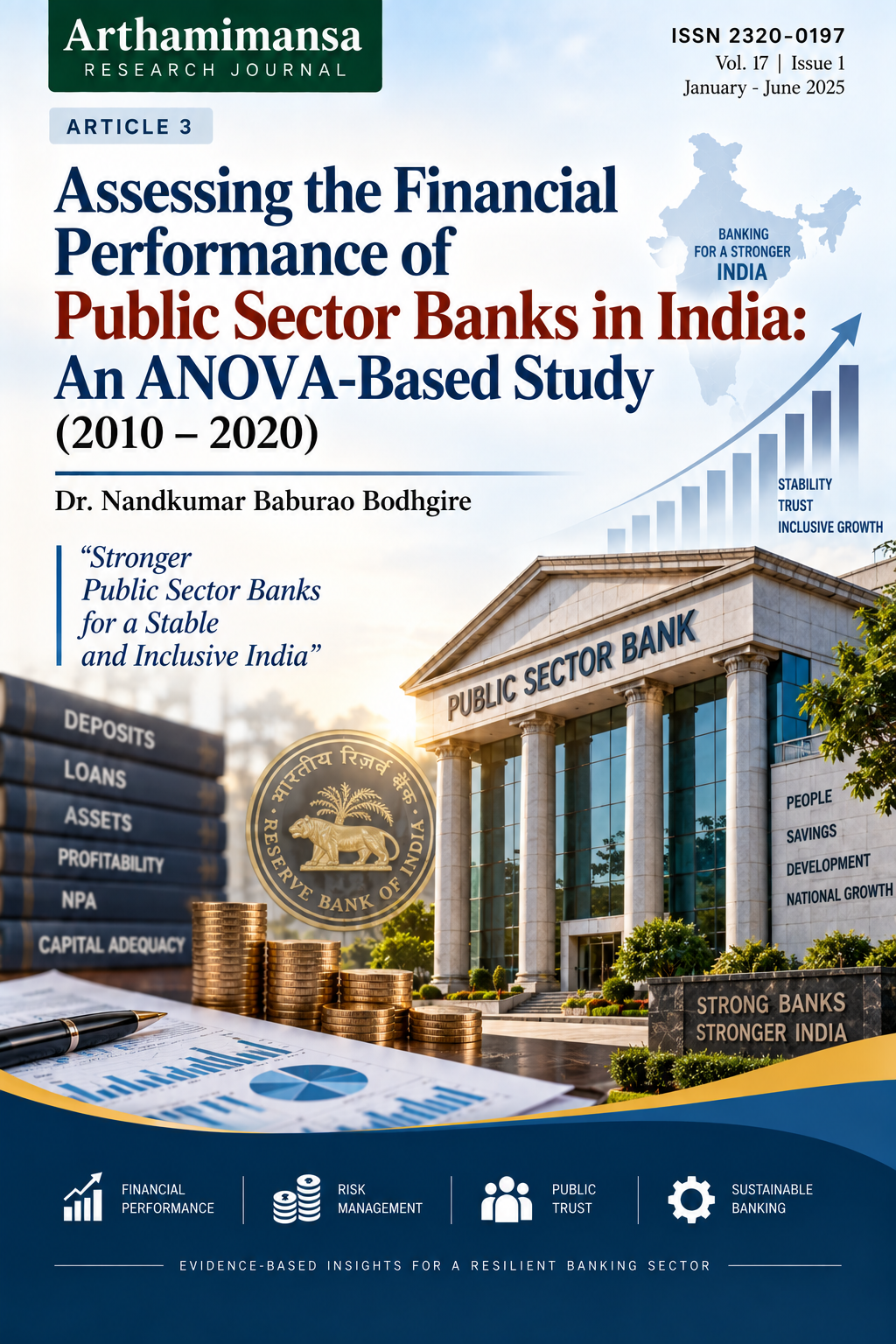
Research Article Assessing the Financial Performance of Public Sector Banks in India: An ANOVA-Based Study (2010–2020)
Preview Abstract

The current article examines the financial performance of all public sector banks in India from 2010 to 2020. This research selected the following variables: the ratio of interest income to total assets, the ratio of net interest income to total assets (net interest margin), the ratio of non-interest income to total assets, the ratio of operational profits to total assets, and the ratio of non-performing assets to total assets. Additionally, return on Equity (ROE), Return on Investments, Capital Adequacy Ratio - Tier I and Tier II, and the ratio of net non-performing assets to net loans are used to assess bank financial performance. Secondary data is taken and analyzed using the ANOVA technique. The study also highlights year-wise financial performance differences among public banks during 2010 to 2020.

Keywords: Ratio of interest income to total assets, Ratio of net interest income to total assets (Net Interest Margin), Ratio of non-interest income to total assets, Ratio of operating profits to total assets, Return on equity, Return on investments, Capital adequacy ratio