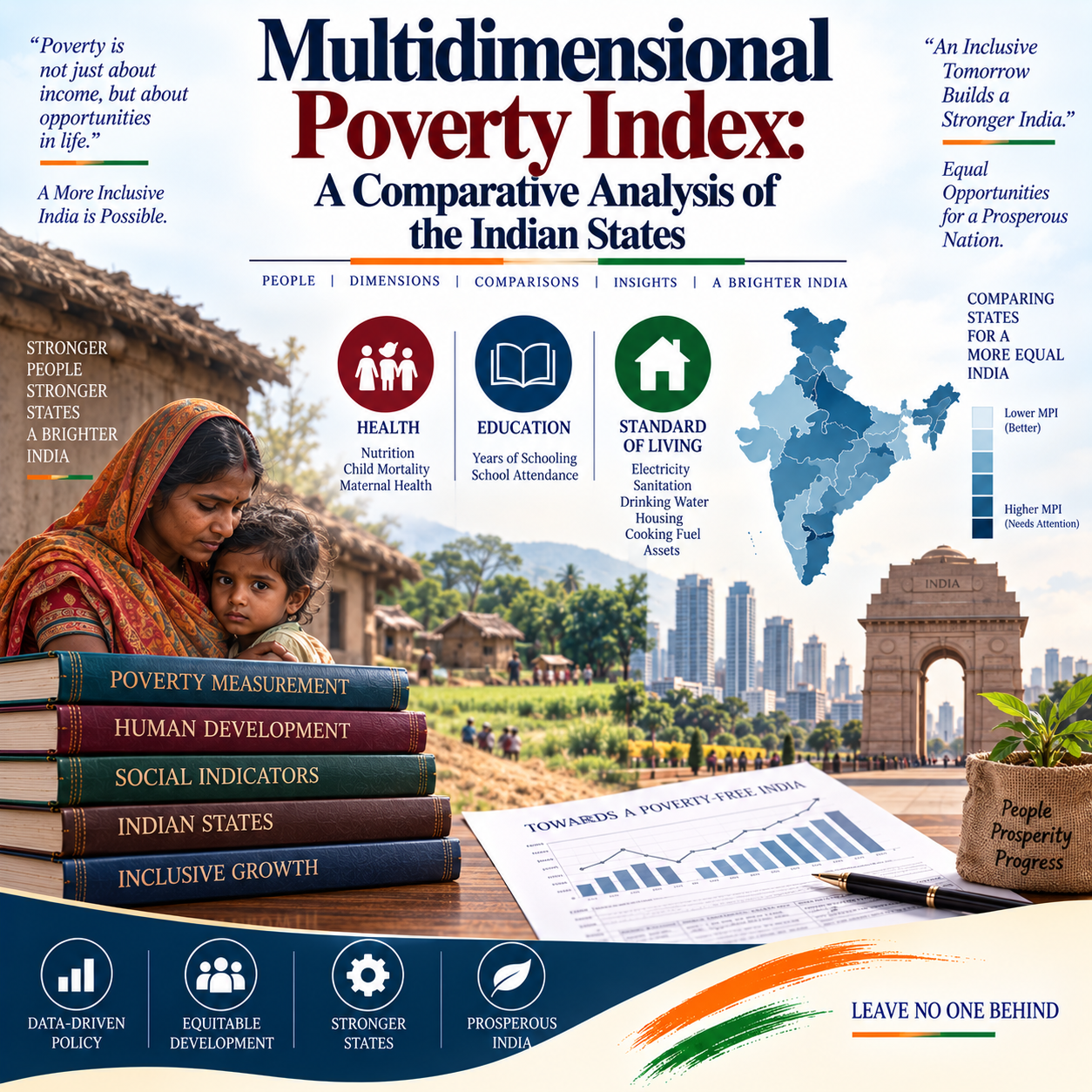

Crime rates can rise for several reasons. Extreme inequality in the distribution of wealth and income and unequal access to educational opportunities may encourage sections of the population to engage in illegal activities. This research examines macroeconomic determinants of economic crime across Indian states, including per capita net state domestic product, the percentage of population living below the poverty line, unemployment and monthly per capita expenditure measured through the Lorenz ratio. The study empirically examines the factors contributing to economic crime across different periods. The findings suggest that the population living below the poverty line has a negative impact on the per capita incidence of economic crime in India, whereas per capita net state domestic product has a significant positive impact.
Keywords: Economic Crime, Poverty, Unemployment, Inequality